
Rethinking “untraditional” work during Women’s History Month
March is Women’s History Month, a time to highlight histories that have too often been overlooked or undervalued. When discussing women in the trades today, the term “untraditional” is still frequently used. However, a closer examination tells a different story.
In medieval Europe, women were not absent from the trades; rather they were embedded in them. The real challenge isn’t finding evidence of their work. It’s recognizing it.
For centuries, women’s contributions to the built environment have been minimized, dismissed, or simply not recorded. What survives in the historical record often reflects not who was working, but whose work was considered worth documenting.
The Workshop, a Family Enterprise
Any discussion of medieval trades must begin with the guild system, which structured much of the economic, social, and political life of urban communities. Guilds regulated skilled trades, overseeing training, production standards, and access to professional practice.
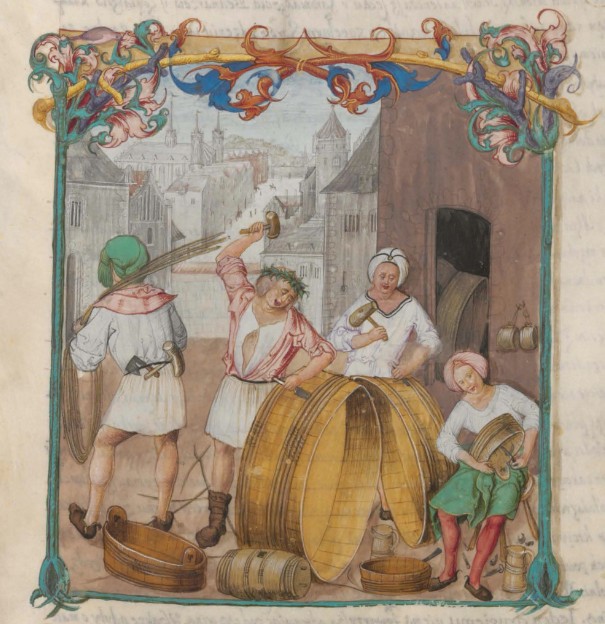
In principle, women were excluded from full participation, particularly from attaining master status or completing formal apprenticeships. In practice, however, the medieval workshop often functioned as a family enterprise. A married couple often formed the backbone of production, and in some cities, a man couldn’t even open a shop without a wife. As a result, wives, daughters, and other members of the household played essential roles in the work.
Despite their active involvement, women’s labor was rarely recognized as independent work. Instead, it was often subsumed under the identity of the household. As historian Merry Wiesner has observed, authorities frequently categorized women’s economic contributions as “support” rather than legitimate labor, thereby excluding them from taxation and official documentation.
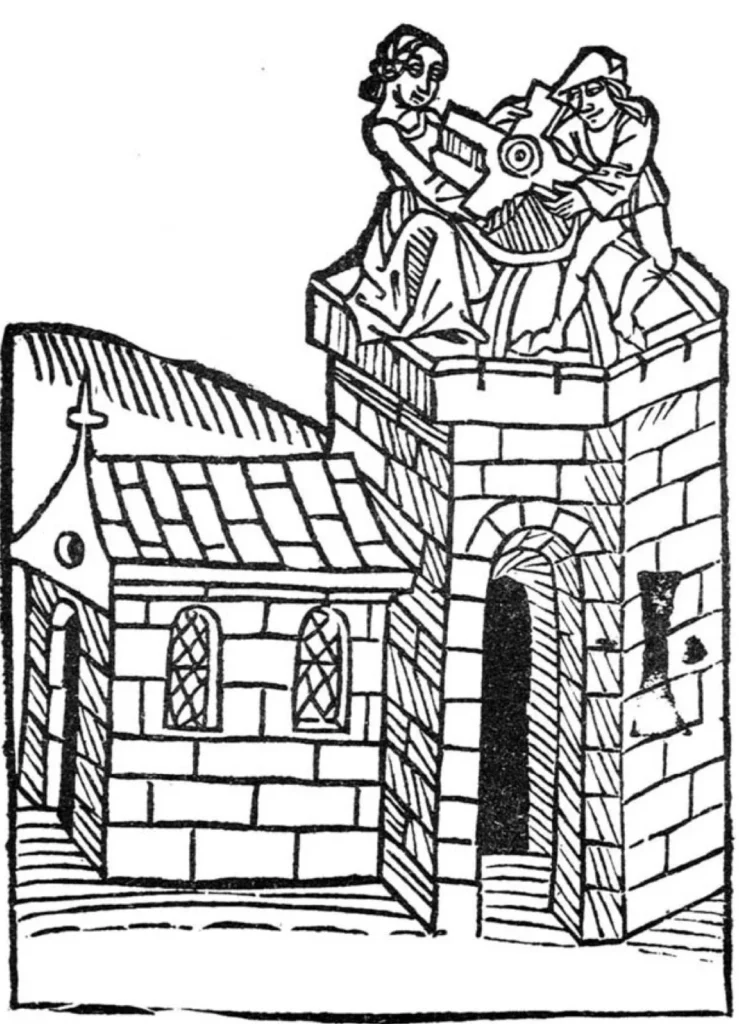
Spiegel der Menschlichen Behältnis, 15th century
(The Morgan Library & Museum.)
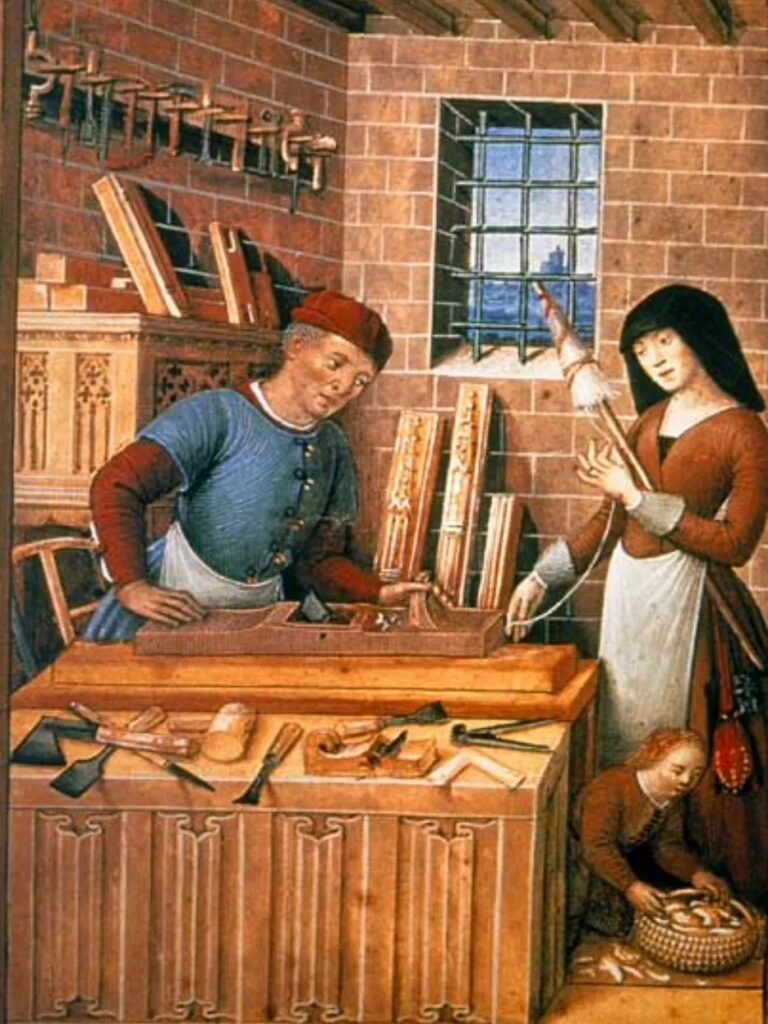
The Four Conditions of Society: Work, Jean Bourdichon, c. 1505–1510.
(École Nationale Supérieure des Beaux-Arts, Paris)
Skilled, Present—and Overlooked
Women’s participation in workshops extended well beyond incidental assistance. They contributed directly to skilled production and, in many cases, helped manage workshop operations.
Contemporary sources reflect this expectation. In The Treasure of the City of Ladies (1405), Christine de Pizan advised that a craftswoman should be thoroughly familiar with all aspects of her husband’s trade in order to oversee the workshop effectively.
Such guidance underscores an important distinction: women’s competence was not in question. Rather, their recognition and authority were constrained by social norms that limited their formal status within the trades.
Beyond the Workshop: Women on Job Sites
Certain trades, particularly those requiring work on construction sites, such as masonry and carpentry, were considered less appropriate for women. Cultural and religious norms often framed manual labor, particularly outside the home, as unsuitable for them.
Nevertheless, historical records indicate that women did participate in these trades. Municipal documents from cities such as London and Paris reveal women working as masons, carpenters, and other building professionals between the fourteenth and seventeenth centuries. In Paris, guild statutes compiled in the late thirteenth century identify women as heads of households engaged in construction-related trades.
Additional evidence appears in tax records from the early fourteenth century, which list women working as masons, tilers, and plasterers. In Strasbourg, two women joined the masons’ guild in the mid-fifteenth century, obtaining not only professional recognition but also the civic rights associated with guild membership.
These examples suggest that women’s participation in the building trades, while often underrecognized, was neither rare nor incidental.
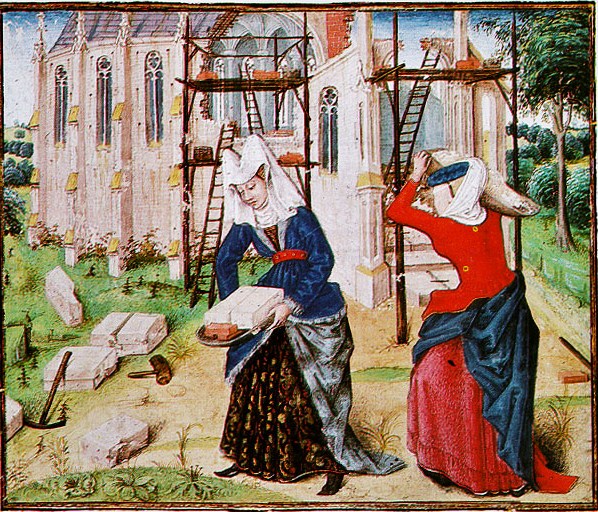
(Österreichische Nationalbibliothek, Vienna)
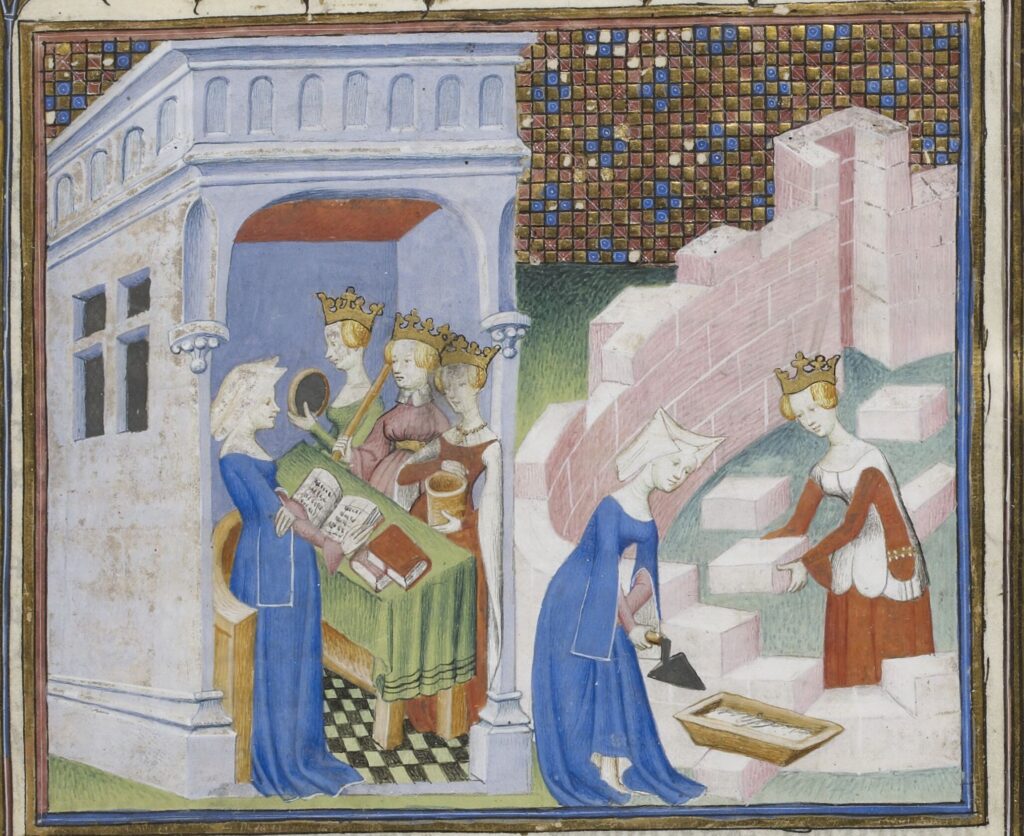
(Gallica, National Library of France, Department of Manuscripts)
Erasure Through Regulation
Beginning in the fifteenth century and continuing into the early modern period, restrictions on women’s participation in the trades became more pronounced. Guild regulations and civic ordinances increasingly sought to limit or prohibit women’s work in certain occupations.
Balthasar Behem Codex, 1505.
(Jagiellonian Digital Library, Jagiellonian University)
While these measures were often framed in moral or social terms, many historians interpret them as responses to economic pressures. Women’s labor, which was frequently compensated at lower rates, posed competition to male craftsmen, particularly during periods of economic instability.
The repeated issuance of such regulations suggests that they were not consistently enforced. Women continued to work despite formal restrictions, indicating the persistence—and necessity—of their labor within the urban economy.
One case from 1605 describes a glazer in Memmingen (now in modern day Germany) arguing that while his wife should remain working at home, his daughter should be allowed to work alongside him in public until she married. Even as restrictions tightened, families still relied on women’s labor in practical ways.
A Hidden Legacy
Over time, as trades became more formalized and professionalized, women’s participation narrowed. What had once been a flexible, family-based system became more rigid and more exclusionary.
The historical record, however, tells a different story. Medieval women contributed meaningfully to skilled trades, supported workshop economies, and were active participants in the building crafts themselves.
Recognizing these contributions is not simply about correcting the past. It challenges long-standing assumptions about women’s place in the trades, reshaping how we understand the present and who we imagine belongs in the trades today.
Sources & Further Reading
‘Appropriate to Her Sex?’ Women’s Participation on the Construction Site in Medieval and Early Modern Europe — Scholarly chapter by Shelley E. Roff examining women’s direct involvement in skilled trades and construction work and challenging the idea that building trades were exclusively male. Medieval Women and Wealth (Palgrave Macmillan, 2010)
Crafts, Gilds, and Women in the Middle Ages — Influential article by Maryanne Kowaleski and Judith M. Bennett exploring women’s economic roles in guilds and how historians have interpreted their participation. Signs (University of Chicago Press, 1989)
Craftswomen and the Guilds — Blog article by Suzanne Ellison outlining how women participated in and navigated guild systems despite structural barriers. Lost Art Press (2016)
Women in Construction: An Early Historical Perspective — Conference paper by Yilmaz Hatipkarasulu and Shelley E. Roff tracing women’s roles in construction across history and situating medieval labor within a broader timeline. 47th ASC Annual International Conference Proceedings (Associated Schools of Construction, 2011)
Women in the Workshop — Blog article by Suzanne Ellison highlighting everyday evidence of women working in craft workshops. Lost Art Press (2016)