
March 11
March 11th is Worship of Tools Day, a perfect moment to celebrate the tools that make historic trades possible. From the earliest stone implements to the specialized tools used by craftspeople today, tools have shaped human history and the built world around us.
The First Tools
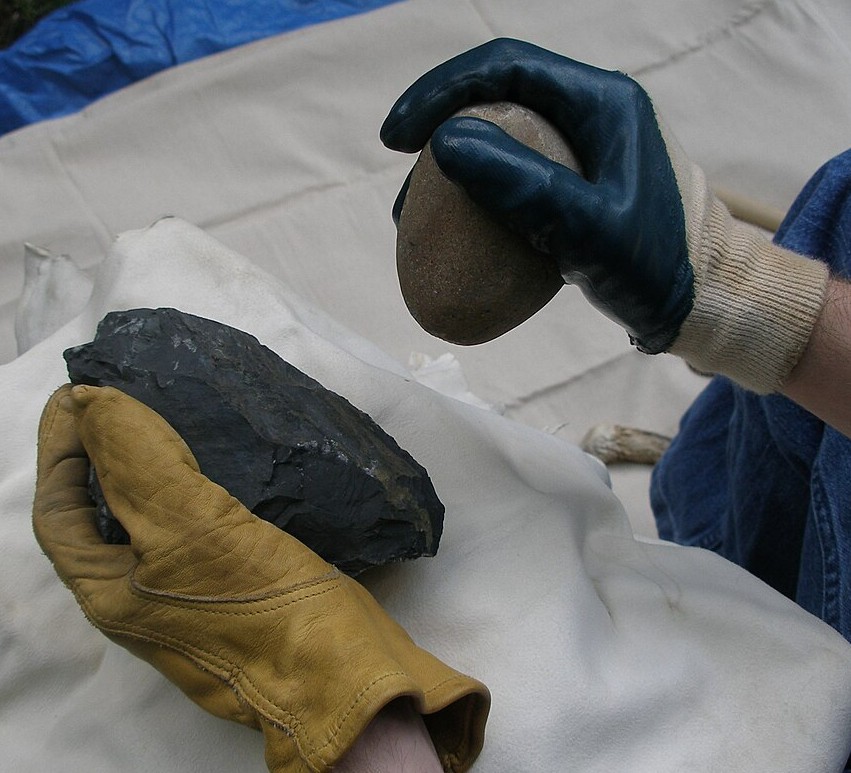
The earliest known toolmakers were Homo habilis, whose name fittingly means “handy man” in Latin. Living more than two million years ago, they discovered that striking two stones together could produce a razor-sharp cutting edge. These early stone flakes became some of humanity’s first cutting tools. Stones were also used as simple hammers for cracking nuts, shells, and animal bones.
Over time, stone tools slowly evolved. Around 1.5 million years ago, humans began shaping larger, flatter tools with broad cutting edges known as hand axes—one of the longest-lasting tool designs in human history.

Portable Antiquities Scheme
A major breakthrough came about 100,000 years ago, when early modern humans began creating compound tools. By fastening a stone tool to a wooden handle, they created stronger, more efficient tools. This innovation dramatically expanded what humans could build and shape.
Around 6500 years ago, the discovery of copper smelting in the Middle East marked the beginning of the Copper Age. Metal tools were stronger and more durable than stone. By the time the ancient Egyptians were building the pyramids nearly 5,000 years ago, many recognizable workshop tools already existed. Craftspeople used both wooden mallets and stone hammers as well as saws, chisels, drills, and the axe-like adze made of copper and bronze.
Around 1100 BC, the discovery of iron smelting ushered in another major advance. Iron tools proved stronger and more durable than those made from copper or bronze and would remain the dominant material for tools from the Roman period through the 19th century.
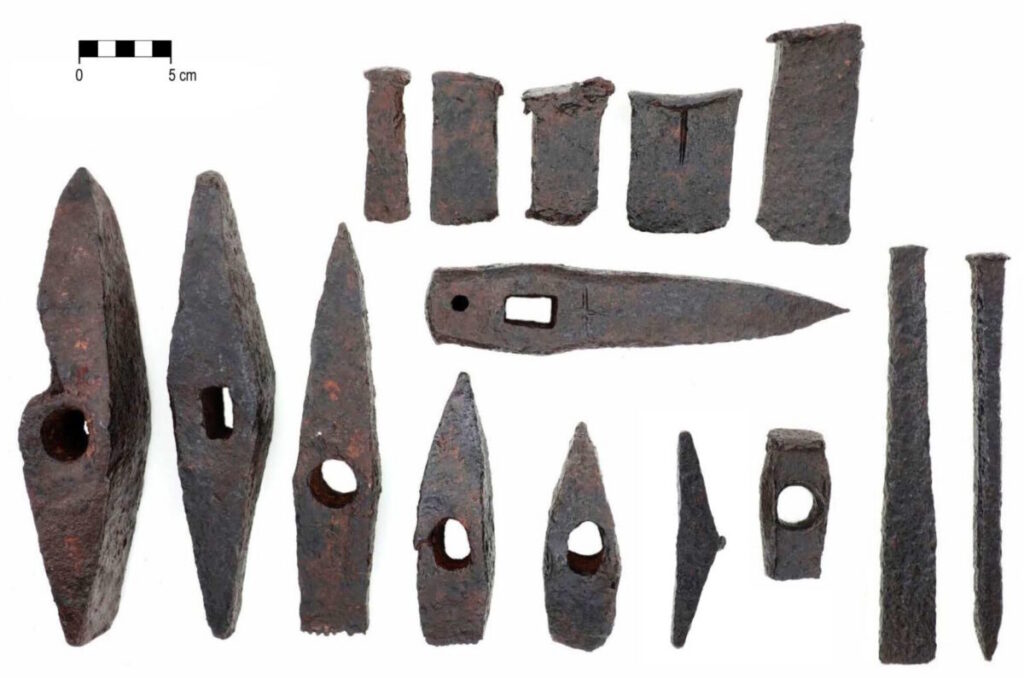
Corvin Castle Museum
The Hammer
If creation is often imagined as forging or shaping something into existence, the hammer is its symbol.
Early hammers were simply handheld stones. This basic form remained common until the classical Greek period, when tools began to incorporate handles. Over time, hammer heads were made from bronze, then iron, and eventually steel.
Public Domain
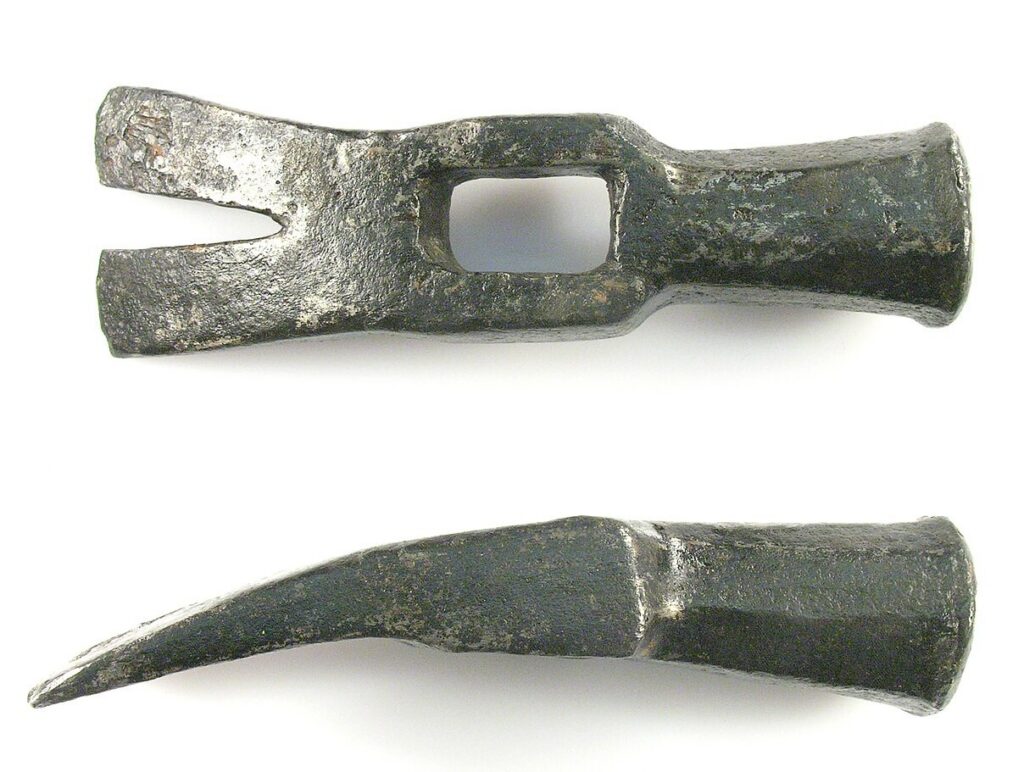
Museum of London
The Romans, who made extensive use of nails in construction, helped popularize hammer designs that included claws for removing nails — an early form of the modern claw hammer.
Across cultures and centuries, the hammer has taken countless forms, but its basic purpose of delivering controlled force has remained unchanged.
The Drill
Drilling tools also date back to the Stone Age, when sharpened sticks or stones were used to bore holes.
About 2,000 years ago, a major improvement occurred when a cutting bit was attached to a rotating shaft. Later innovations such as the bow drill, which used a bowstring wrapped around the shaft, allowed users to drill more efficiently with less effort.
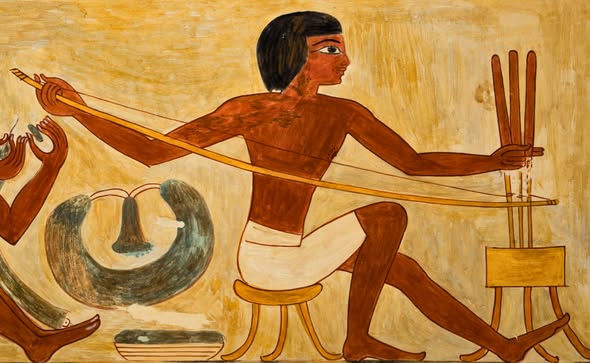
New Kingdom, Ancient Egypt, ca. 1504–1425 BCE.
The Met Collection
During the medieval period, tools such as breast drills and augers were developed. These tools relied on the user’s body weight to maintain steady pressure while drilling.
By the 15th century, the joiner’s brace appeared in Europe. This tool represented a completely new design rather than an evolution of earlier drills. By the early 1500s, all-metal braces were already in use in Germany, and the basic form continued to evolve until the mid-19th century, when the familiar brace-and-bit design became standardized.

By Georges de La Tour, 1642.
Louvre Museum
The Saw
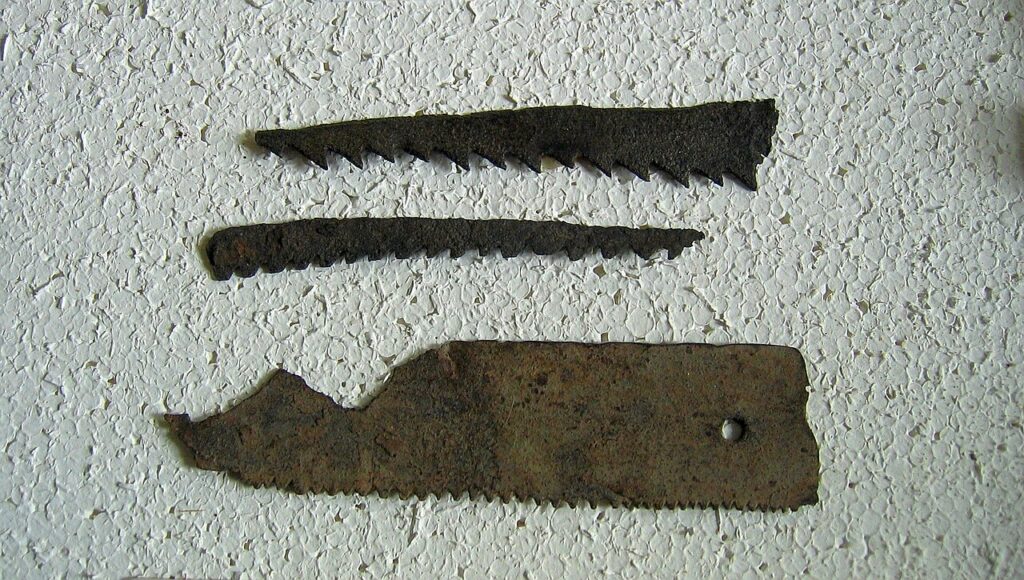
Saws date back at least to ancient Egypt, where metal blades were used for woodworking.
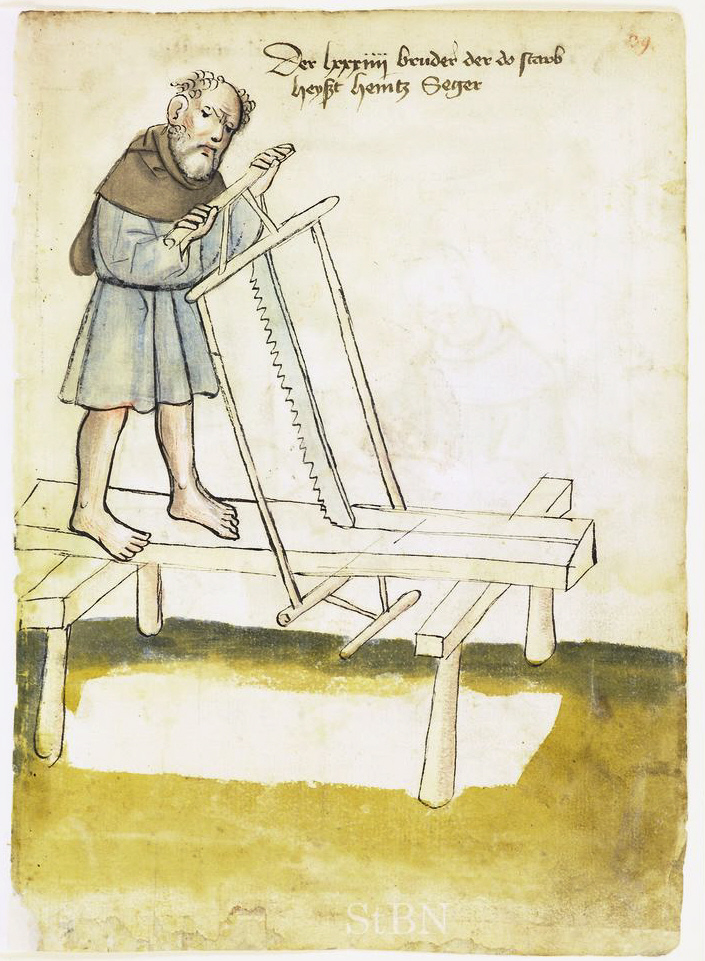
The Greeks and Romans improved saw design by introducing wooden frames to support the blade and by setting the teeth alternately, bending them slightly left and right, to produce smoother and more accurate cuts.
The Vindonissa-Museum

The Wellcom Collection
Historic saws are surprisingly rare today. Before modern manufacturing, saw blades were extremely difficult to produce. Achieving the correct balance of hardness, flexibility, and stiffness required exceptional metalworking skill. Over time, repeated sharpening by their owners slowly wore the blades down until little remained
For large-scale work such as logging, workers used two-person pit saws beginning in the 18th century. Logs or planks were placed across a pit while one worker stood above and another below, pulling the saw vertically through the wood.
The quality of saw blades improved dramatically in the 19th century with the widespread use of steel. In 1855, Philadelphia toolmaker Henry Disston founded the first steel melting plant in America dedicated to sawmaking. His specialized rolling mill produced uniform steel blades that could be cut and stamped with teeth.
Disston’s innovations made high-quality hand saws widely available in the United States and earned him a reputation as the father of the American handsaw, a legacy that continues in the brand name today.
“The Book of Crafts” by Marquard Mendel, 1426, Central Europe.
Rynek Underground Museum in Krakow
The Axe and Adze
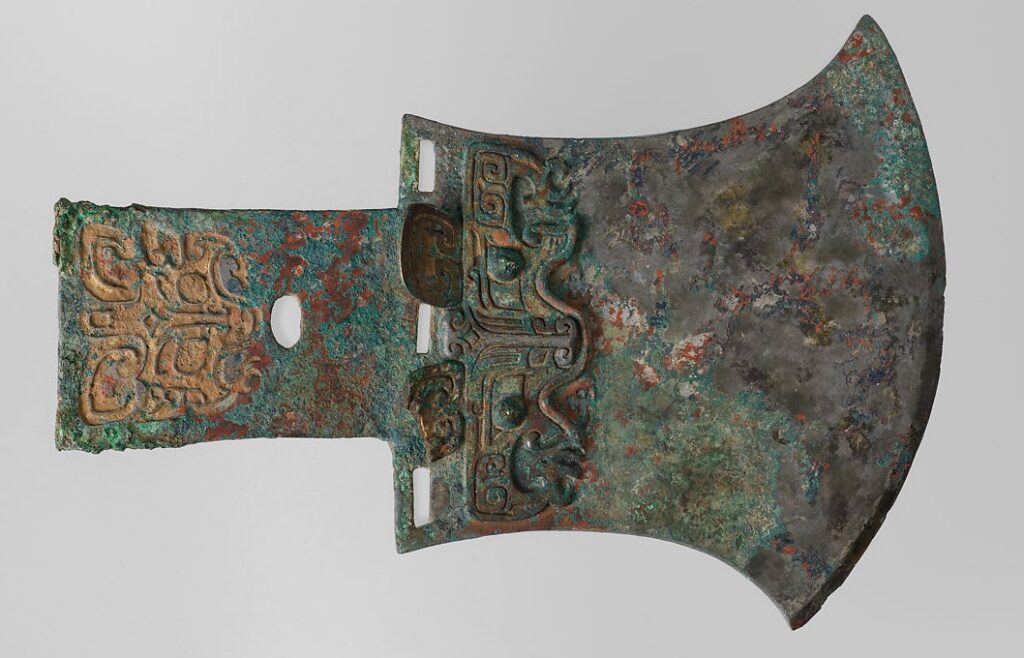
The axe is one of humanity’s oldest and most versatile tools. The earliest axes consisted of chipped stone edges used without handles. Eventually, these blades were attached to wooden shafts, creating a much more powerful cutting tool.
The Met Collection
Brooklyn Museum
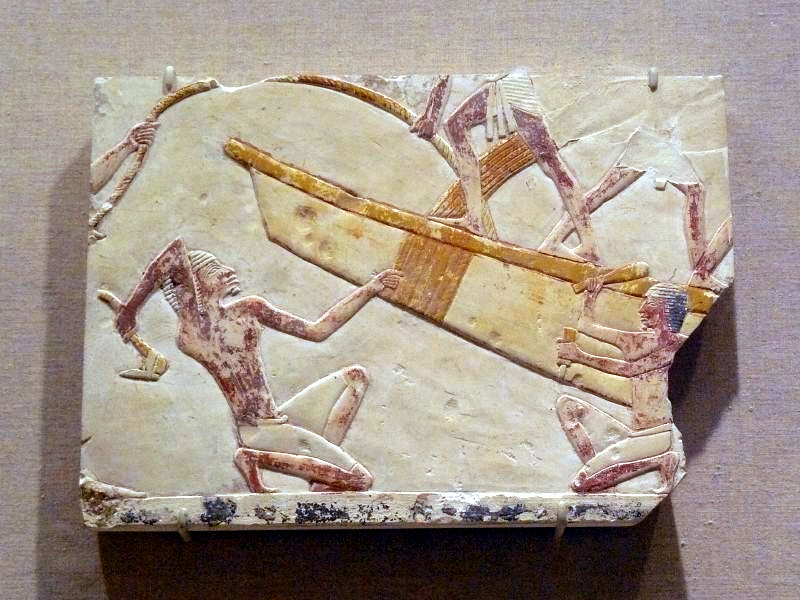
Closely related is the adze, used extensively by ancient Egyptian woodworkers. With its blade mounted perpendicular to the handle, the adze functioned much like an early hand plane, allowing craftspeople to shape logs into smooth planks.
Metal versions of axes and adzes began appearing around 3000 BC in the Middle East using copper and bronze. By 500–200 BC, iron axes had developed shapes very similar to those still used today.
Celebrating Tools and Craftsmanship
From the first stone flakes to finely crafted steel tools, the history of tools is inseparable from the history of human craftsmanship. This Worship of Tools Day, we celebrate the tools, and the skilled hands that use them, that continue to keep historic trades alive.
Sources & Further Reading
Restoring Antique Tools — Herbert P. Kean’s guide to identifying, preserving, and restoring historic hand tools, offering insight into how traditional tools were maintained and kept in working order by earlier tradespeople.
The Art of Fine Tools — Sandor Nagyszalanczy’s illustrated exploration of finely crafted hand tools, highlighting their design, craftsmanship, and the traditions of toolmaking.
Classic Hand Tools — Garrett Hack’s examination of traditional woodworking tools, discussing their history, purpose, and the craftsmanship behind some of the most important tools used in historic trades.
A Brief History of Tools — An overview from Hampshire Cultural Trust tracing the development of tools from early stone implements to modern innovations.
https://collections.hampshireculture.org.uk/topic/brief-history-tools